
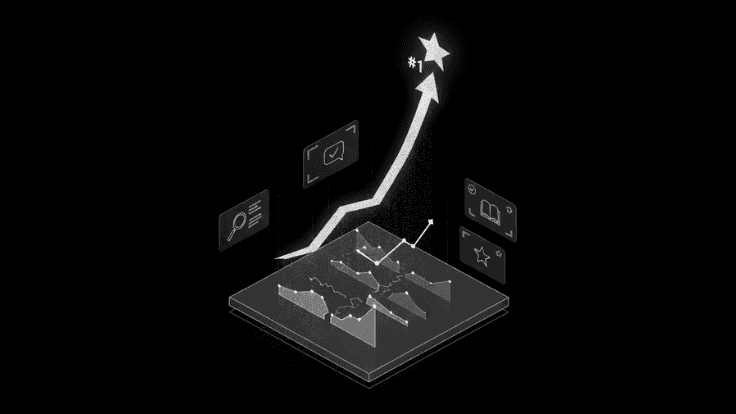
GTM velocity dies when your ICP becomes a committee decision
Most revenue stalls happen because nobody owns buyer definition. The result is predictable: targeting becomes an endless debate while competitors close deals with clarity and speed.
The problem is not that your team lacks data. It's that your ICP has become a political artifact instead of an operational asset. When buyer definition lives in a slide deck instead of a system, every campaign becomes a negotiation. Every outbound motion requires consensus. Every new hire inherits ambiguity instead of clarity.
GTM velocity is not a motivational concept. It is a composite metric that captures how quickly revenue moves through your funnel by combining deal size, win rate, and sales cycle length. When your ICP is owned by committee, velocity collapses. Not because your product is wrong or your team is weak, but because the system that defines who you sell to has no single owner, no feedback loop, and no connection to execution.
This is the gap between companies that scale and companies that stall.
The committee trap: when everyone owns ICP, nobody does
Most B2B SaaS companies treat ICP definition as a cross-functional exercise. Marketing builds personas. Sales adds anecdotes. Product contributes feature usage data. RevOps tries to reconcile it all in a spreadsheet. The output is a document that satisfies everyone and guides no one.
The committee approach feels collaborative, but it creates three structural problems that kill GTM velocity.
First, it decouples targeting from outcomes. When ICP is defined by consensus, it reflects what the team believes, not what the data proves. Marketing targets accounts that fit the profile. Sales pursues deals that feel right. Customer success inherits churn risk because the original definition was aspirational, not empirical. The feedback loop never closes because no single owner is accountable for whether the ICP actually converts, expands, or retains.
Second, it turns every GTM decision into a debate. Should you target mid-market or enterprise? Should you prioritize industry vertical A or B? Should you focus on companies with a specific tech stack or a specific pain point? Without a single owner who can make the call and iterate based on results, these questions get relitigated in every planning cycle. The cost is not just time. It's the opportunity cost of not executing while competitors move.
Third, it creates drift between strategy and execution. The ICP document says one thing. The SDR team targets another. The AE team closes a third. Marketing runs campaigns to a fourth. RevOps tries to measure it all and discovers that no two teams are using the same definition. The result is not just misalignment. It's a system that cannot learn because it has no consistent input.
Buyer definition is an operating system, not a document
The companies that win do not treat ICP as a static artifact. They treat it as a dynamic system with a single owner, a clear feedback loop, and direct integration into execution.
This means three things.
First, one person owns buyer definition. Not a committee. Not a cross-functional working group. One leader who is accountable for defining who you sell to, updating that definition based on outcomes, and ensuring every GTM motion aligns to it. In high-performing teams, this is typically the head of RevOps or the head of GTM. The role matters less than the accountability. The owner must have the authority to make the call, the data to validate it, and the responsibility to iterate when the definition is wrong.
Second, the ICP is instrumented. It is not a persona slide. It is a set of rules that live in your CRM, your enrichment tools, your scoring models, and your routing logic. When a lead enters the system, it is automatically evaluated against the ICP. When an account converts, the system logs which attributes correlated with velocity. When a deal stalls or churns, the system flags whether the account was in-profile or out-of-profile. This is not a reporting exercise. It is a feedback loop that allows the system to learn.
Third, the ICP is connected to execution. Marketing campaigns target in-profile accounts. SDRs receive leads that match the definition. AEs prioritize opportunities that fit the criteria. Customer success tracks retention by ICP tier. Every team operates from the same definition, and every outcome feeds back into the system. This is what separates GTM as an operating system from GTM as a collection of tools.
Signal-based workflows replace consensus-based targeting
When ICP is owned and instrumented, targeting shifts from debate to signal. Instead of asking "who should we target," the system asks "who is showing intent, fit, and timing."
This is the difference between static segmentation and dynamic prioritization. Static segmentation divides your TAM into categories based on firmographics: company size, industry, geography, tech stack. Dynamic prioritization layers behavioral signals on top of fit: website visits, content downloads, job changes, funding events, competitor mentions, product usage patterns.
The workflow looks like this. A signal enters the system: an account visits your pricing page, a decision-maker changes jobs, a competitor loses a deal, a prospect engages with your content. The system evaluates the signal against your ICP: does this account match the profile? Is the signal strong enough to warrant action? Is the timing right? If yes, the system routes the signal to the appropriate motion: inbound SDR follow-up, outbound sequence, account-based campaign, direct AE outreach.
The key is that the system makes the decision, not the committee. The rules are predefined. The thresholds are calibrated based on historical conversion data. The routing logic is automated. The human role is not to debate whether the account is worth pursuing. It is to execute the motion and feed the outcome back into the system.
This is how AI-native GTM works. The system ingests signals, evaluates fit, prioritizes action, and routes execution. The human adds context, handles objections, closes deals, and validates whether the system's prioritization was correct. The feedback loop tightens. The system learns. Velocity increases.
Automation without ownership is just faster chaos
The mistake most teams make is automating before they have clarity. They deploy AI SDRs before they define who to target. They build scoring models before they instrument the ICP. They launch account-based campaigns before they agree on what "account-based" means. The result is not velocity. It is automated chaos.
Automation amplifies the system you have. If your ICP is owned by committee, automation will scale the debate. If your targeting is based on assumptions instead of data, automation will scale the assumptions. If your GTM motions are misaligned, automation will scale the misalignment.
This is why ownership comes first. Before you automate lead scoring, someone must own what "qualified" means. Before you deploy AI agents to research accounts, someone must define what makes an account worth researching. Before you build signal-based workflows, someone must decide which signals matter and how they should be weighted.
The sequence is: ownership, instrumentation, automation, scale. Skip the first two and the last two will fail.
The compounding advantage of single-owner ICP
When one person owns buyer definition, three things compound over time.
First, the definition gets sharper. The owner is not trying to satisfy multiple stakeholders. They are trying to maximize velocity. This means they can make opinionated calls, test them quickly, and iterate based on results. Over time, the ICP becomes more precise, more predictive, and more aligned to the accounts that actually convert and retain.
Second, the system learns faster. Because the definition is consistent, the feedback loop is clean. Every win, loss, stall, and churn feeds back into the same model. The system can identify patterns, adjust thresholds, and refine prioritization. This is not possible when different teams are using different definitions. The data is too noisy. The signal is too weak.
Third, execution becomes predictable. When every team operates from the same ICP, GTM becomes a system instead of a series of campaigns. Marketing knows who to target. SDRs know who to call. AEs know who to prioritize. Customer success knows who to retain. The handoffs are clean. The metrics are aligned. The outcomes are measurable.
This is the difference between companies that scale and companies that plateau. Scaling is not about doing more. It is about building systems that compound. Single-owner ICP is one of those systems.
Where AI agents fit in the GTM operating system
AI agents do not replace the need for ownership. They amplify the value of it.
When your ICP is owned and instrumented, AI agents can execute the workflows that used to require manual effort. They can research accounts, enrich leads, score fit, personalize outreach, log activity, update the CRM, and escalate to humans when judgment is required. They operate continuously, at scale, without fatigue.
But they require clarity. An AI agent cannot decide who to target if the ICP is ambiguous. It cannot prioritize accounts if the scoring model is inconsistent. It cannot personalize outreach if the value proposition is debated. The agent executes the system. It does not design it.
This is why the best GTM teams are pairing single-owner ICP with AI-native workflows. The owner defines the rules. The system instruments them. The agents execute them. The humans handle the exceptions, close the deals, and feed the outcomes back into the system. The loop tightens. The velocity increases.
How to move from committee to system
If your ICP is currently owned by committee, the path forward is not to eliminate input. It is to centralize accountability.
Start by assigning a single owner. This is typically the head of RevOps, the head of GTM, or the VP of Sales. The owner's job is not to ignore the input from marketing, sales, product, and customer success. It is to synthesize that input, make the call, and own the outcome.
Next, instrument the definition. Move the ICP out of the slide deck and into the system. Define the firmographic criteria, the behavioral signals, the scoring thresholds, and the routing logic. Build it into your CRM, your enrichment stack, your lead scoring model, and your campaign targeting. Make it operational, not aspirational.
Then, connect it to execution. Ensure that every GTM motion is aligned to the ICP. Marketing campaigns target in-profile accounts. SDRs follow up on in-profile leads. AEs prioritize in-profile opportunities. Customer success tracks retention by ICP tier. Every team operates from the same definition.
Finally, close the feedback loop. Track which accounts convert, expand, and retain. Identify which attributes correlate with velocity. Adjust the ICP based on outcomes, not opinions. Make the system empirical, not political.
This is how you move from committee to system. This is how you restore GTM velocity.
The cost of waiting
Every quarter you spend debating ICP is a quarter your competitors spend executing. Every campaign you launch without clarity is a campaign that could have been sharper, faster, and more effective. Every deal you lose because your targeting was ambiguous is a deal you will not get back.
The cost of committee-based ICP is not just inefficiency. It is the compounding loss of velocity. The longer you wait to centralize ownership, the further behind you fall.
The companies that win are not the ones with the best data or the most sophisticated tools. They are the ones with the clearest systems. They know who they sell to. They know how to find them. They know how to convert them. And they know how to do it faster than everyone else.
GTM velocity is not a function of effort. It is a function of clarity. And clarity requires ownership.
Build GTM as a system, not a set of campaigns
If your revenue is stalling because nobody owns buyer definition, you are not alone. Most B2B SaaS companies are stuck in the same trap. But the solution is not more data, more tools, or more consensus. It is a shift from committee to system.
At Welaunch, we help founders and GTM leaders build AI-native operating systems that replace fragmented tools and endless debates with clarity, automation, and velocity. We deploy AI agents, automate signal-based workflows, instrument RevOps infrastructure, and integrate voice agents that execute at scale while humans focus on strategy and closing.
If you are ready to move from campaigns to systems, from debate to execution, from stalled pipeline to compounding velocity, book a call. We will show you how to architect GTM as an operating system, not a collection of tools.